

Is Your Work Trailer Costing You Time? When Contractors Should Consider a Storage Unit
A work trailer is supposed to make the day easier. It carries the tools, equipment, and materials you need from one job to the next.
But as a contracting business grows, the trailer can gradually take on another role: storage.
Extra materials stay in the back. Backup tools travel everywhere. Supplies for next week compete with equipment you need today. Eventually, the trailer is carrying more of the business than the current job requires.
That doesn’t necessarily mean you need a bigger trailer.
It may mean you need to separate what needs to stay mobile from what simply needs a place to stay.
Your Trailer Should Carry the Job, Not Your Entire Business
For many contractors, a truck or trailer is the most practical place to keep everyday equipment. Everything travels together, and the tools you use regularly are close at hand.
That system works until the trailer starts becoming the default home for everything the business owns.
The important question isn’t how much more you can fit inside. It’s whether carrying all of it is still helping you work efficiently.
If equipment for today’s job is sharing space with backup tools, leftover materials, bulk supplies, and items you rarely use, the trailer may be doing two different jobs at once.
That’s where a simple distinction can help.
Mobile Storage vs. Business Storage
Think about your equipment in two categories.
Mobile storage is what needs to travel with you: the tools, equipment, and materials required for the work you’re doing now.
Business storage is what needs a reliable home base but doesn’t need to ride with you every day: backup tools, extra supplies, bulk materials, leftover job materials, and equipment used less frequently.
Separating the two can make the trailer easier to use without forcing you to get rid of things the business still needs.
Instead of asking, “How can I fit everything into the trailer?” the better question becomes:
“What actually needs to be in the trailer today?”
That small shift can change the way you use your space.
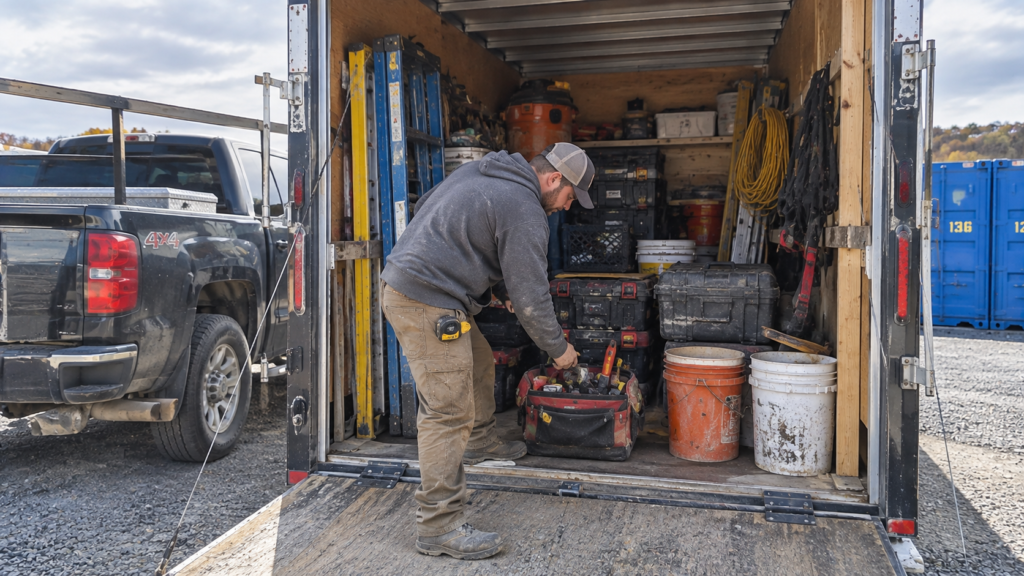
Not every tool or material needs to travel to every job. Separating daily equipment from reserve supplies can make a work trailer more useful.
Where Dedicated Storage Fits
A storage unit can serve as the home base for the part of the business that doesn’t need to stay on the road.
That might mean keeping extra supplies and less frequently used equipment in one place, then loading the trailer based on the work ahead.
The value isn’t simply having somewhere to put more things. It’s giving the trailer a more specific purpose.
For some contractors, the existing setup already works well. If the tools you need are easy to reach and your trailer comfortably supports the work you’re doing, adding storage may not solve anything.
But when the business has more equipment and materials than need to travel every day, dedicated storage becomes worth considering.
Why Drive-Up Storage Matters
For contractor storage to be useful, getting equipment in and out needs to be practical.
SteelSafe’s ground-level, drive-up units allow contractors to bring a work vehicle directly to the storage space for loading and unloading. That matters when you’re handling toolboxes, equipment, supplies, or construction materials—not just a few household boxes.
Instead of carrying everything with you, you can keep reserve items at the unit and load what the next job requires.
SteelSafe also offers month-to-month rentals, giving contractors flexibility without taking on a long-term commercial-space commitment.
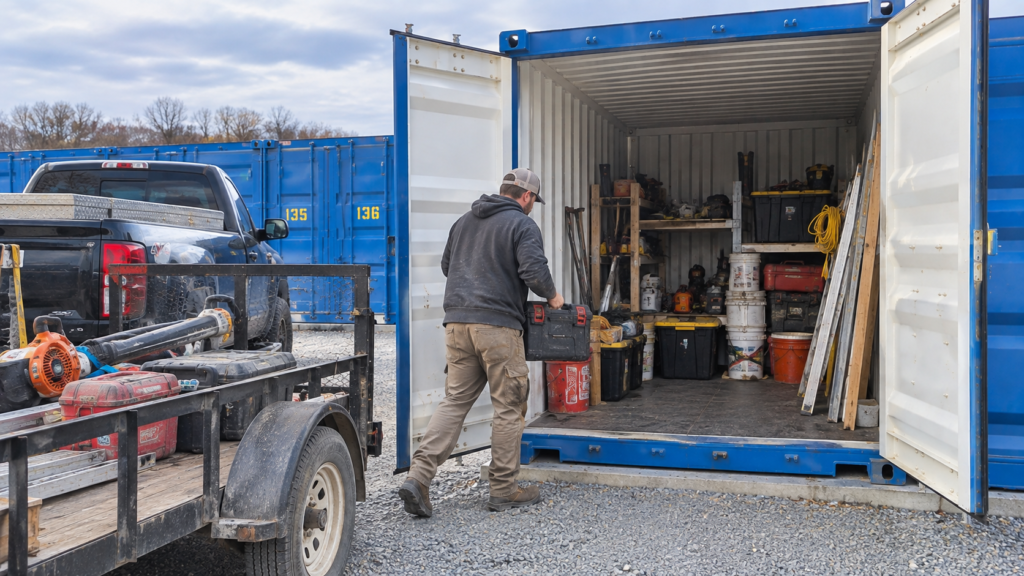
Drive-up storage can give contractors a practical home base for tools, equipment, materials, and supplies that don’t need to travel every day.
How Much Space Does Your Business Actually Need?
The right amount of storage isn’t necessarily the largest unit you can rent. It’s enough space to keep the things you need accessible.
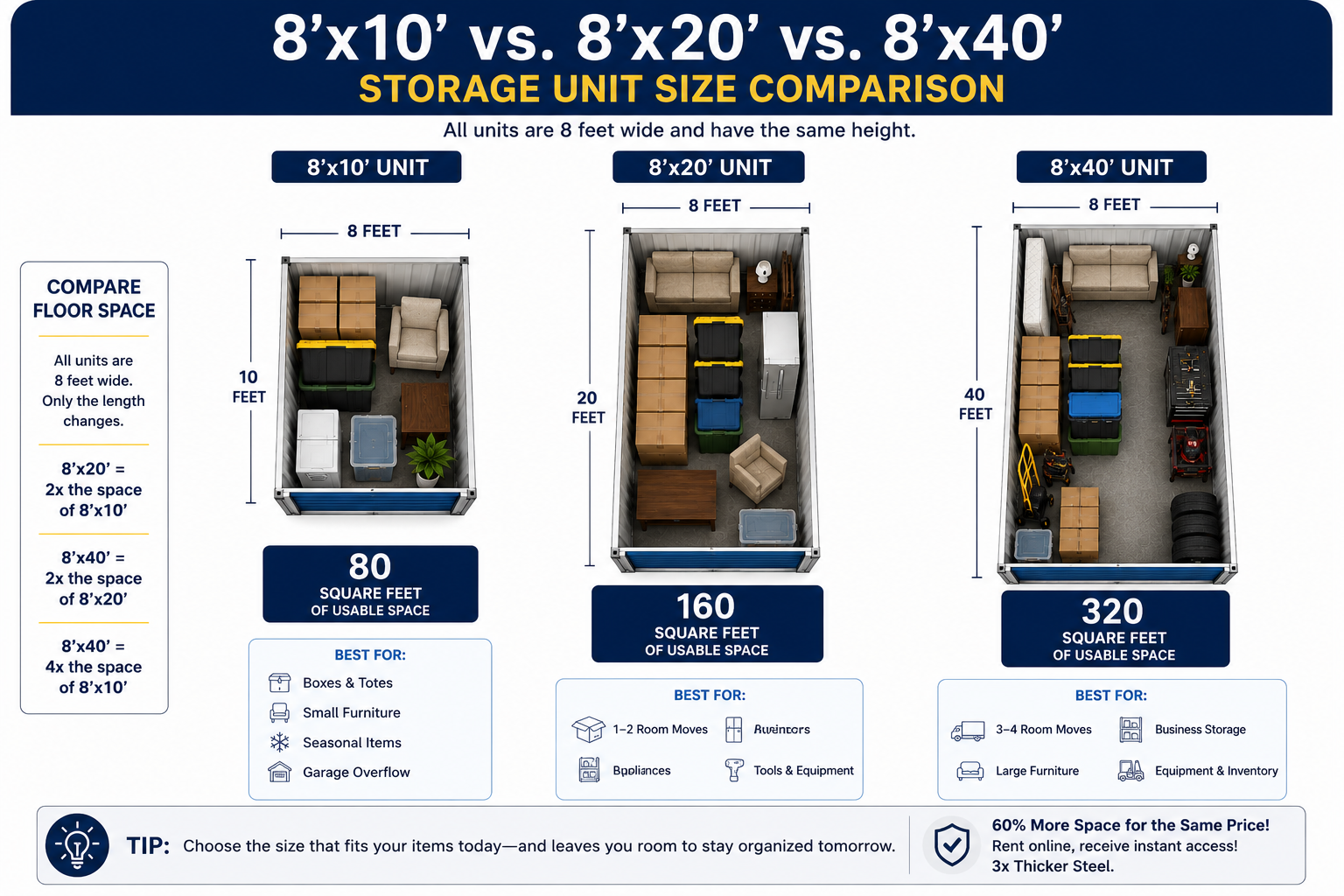
SteelSafe offers ground-level units including 8×10, 8×20, and 8×40, depending on location and availability.
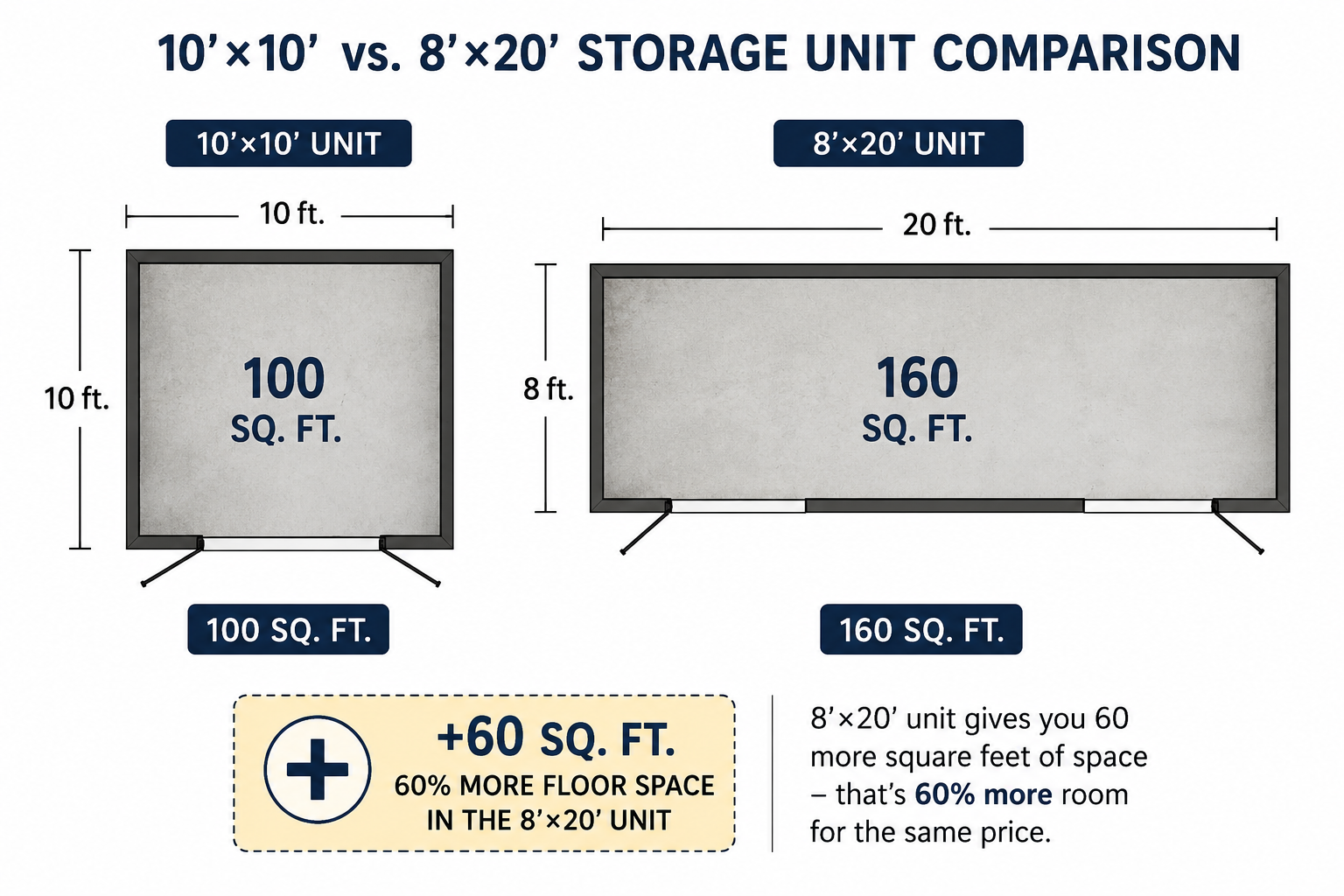
An 8×20 provides 160 square feet of floor space, while an 8×40 provides 320 square feet. For a contractor, that room can be used to separate equipment and materials rather than stacking everything wherever it fits.
The goal is simple: when you need something for the next job, you should be able to get to it.
Does Your Trailer Need More Space—or a More Focused Job?
A crowded trailer doesn’t automatically mean you need a storage unit.
The better signal is what you’re asking the trailer to do.
If most of what it carries is needed regularly on jobs, your current setup may make perfect sense.
If a large part of that space is being used for backup equipment, bulk supplies, leftover materials, or things you only need occasionally, separating business storage from mobile storage could make the setup more practical.
It’s about whether the space you already have is being used for the right purpose.
Keep the Work Mobile. Give the Rest a Home Base.
Your trailer doesn’t have to carry your entire business to every job.
Keep the tools, equipment, and materials you need today mobile. Give the rest of the business a dedicated place to stay until you need it.
The goal isn’t simply more storage. It’s putting the right things in the right place.
If your trailer is carrying more than the job requires, check your nearest SteelSafe location to see which drive-up storage options are available.
Ready to Reserve a Self Storage Unit?
Additional Resources

How Quickly Can I Get Into My Storage Unit After Renting Online?
How Quickly Can I Get Into My Storage Unit After [...]
Storage Unit Moisture and Condensation: What Causes It and How Can You Reduce It?
Storage Unit Moisture and Condensation: What Causes It and How [...]
Drive-Up Storage: What Is It and Who Is It Best For?
Drive-Up Storage: What Is It and Who Is It Best [...]
8×10 vs. 8×20 vs. 8×40 Storage Units: Which Size Do You Need?
8×10 vs. 8×20 vs. 8×40 Storage Units: Which Size Do [...]
What Fits in an 8×20 Storage Unit? See 60% More Floor Space
What Fits in an 8×20 Storage Unit? See 60% More [...]

Decluttering Without Pressure
How to Declutter Without Getting Rid of Everything Decluttering [...]