

How to Store Tools and Building Materials Between Contractor Jobs in Pottstown, PA
For contractors working around Pottstown, every job requires a different combination of tools, equipment, and building materials.
A roofer may start the morning collecting supplies before heading toward Sanatoga. An electrician might need specialty equipment for a service call in Limerick. A remodeling contractor could be moving between jobs in Stowe, Kenilworth, and Douglassville.
The problem is familiar: work vehicles gradually fill with backup tools, extra materials, and equipment that aren’t needed for the current job.
Your truck or trailer should carry today’s job, not your entire business.
An organized storage unit can give Pottstown contractors a convenient home base for permitted tools, packaged building materials, specialty equipment, and reserve supplies.
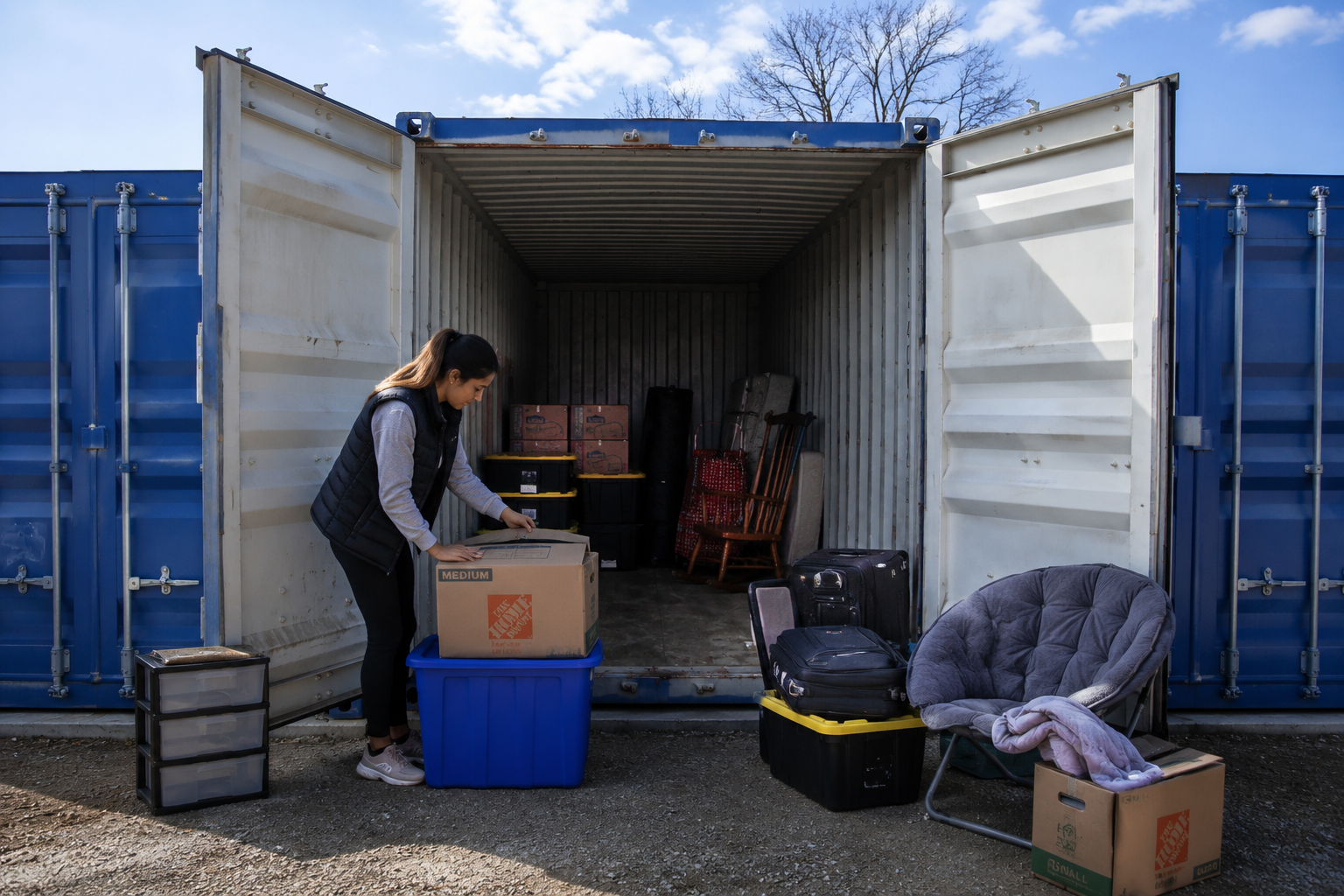
At SteelSafe Self Storage Pottstown, 1178 Commerce Drive, ground-level drive-up storage makes it easier to keep work vehicles organized between jobs.
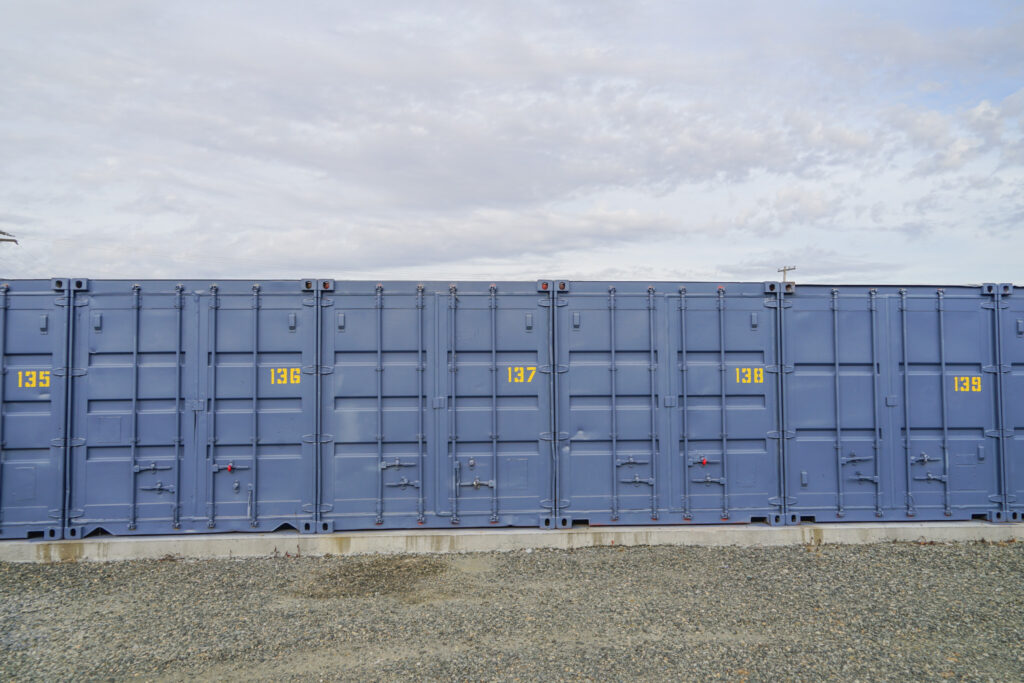
SteelSafe Pottstown offers convenient ground-level drive-up storage for local contractors and small businesses.
Quick Answer: How Should Contractors Store Tools Between Jobs?
Keep the tools and materials needed for today’s job in your work vehicle. Store permitted backup equipment, specialty tools, and reserve supplies in an organized drive-up storage unit.
Arrange belongings by trade or project, keep frequently retrieved items near the entrance, and maintain a simple inventory list.
For contractors managing multiple jobs, an 8×20 or 8×40 storage unit can help separate active supplies from reserve stock without requiring every item to travel in the truck.
1. Mobile Storage vs. Business Storage: Know What Belongs Where
The first step is deciding which tools need to remain mobile and which can stay in storage.
| Keep in Your Truck or Trailer | Keep in Your Storage Unit |
| Tools required for today’s job | Backup tools and specialty equipment |
| Frequently used hand tools | Extra permitted equipment |
| Daily safety gear | Packaged materials for future projects |
| Current job materials | Reserve fittings and hardware |
| Essential service-call supplies | Permitted leftover project materials |
For example, a plumber may carry everyday hand tools and the fittings needed for scheduled calls while storing additional packaged supplies for future jobs.
An electrician might keep regularly used testing equipment in the van while storing backup tool cases and unopened electrical accessories.
A remodeler may need lumber and hardware for one project but not every material purchased for the following week’s work.
The goal is to keep work vehicles useful without turning them into overcrowded warehouses.
For contractors managing larger inventories, SteelSafe’s Business Storage options explain how storage can support work-related equipment and supplies.
If your work trailer is carrying more backup equipment than today’s job requires, our contractor and work-trailer storage guide explains when separating mobile tools from reserve inventory may make sense.
2. Organize Contractor Supplies by Trade or Project
A contractor’s storage unit should work like an organized stockroom.
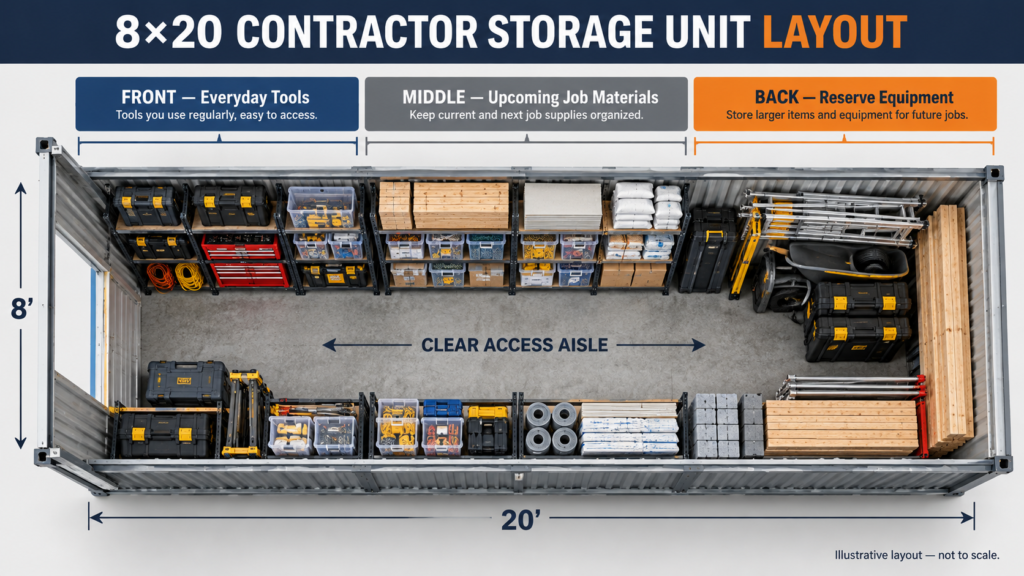
Divide the space into three practical zones.
Front Zone: Frequently Used Tools
Keep regularly retrieved tools, equipment cases, and labeled bins near the entrance.
Middle Zone: Current Job Materials
Use this area for packaged supplies assigned to upcoming work.
Contractors handling multiple projects can label bins or shelves by job.
Back Zone: Reserve Equipment
Store backup tools, permitted larger equipment, and materials that are needed less frequently.
Use stable freestanding shelving where appropriate, keep heavy items low, and leave enough room to retrieve belongings safely.
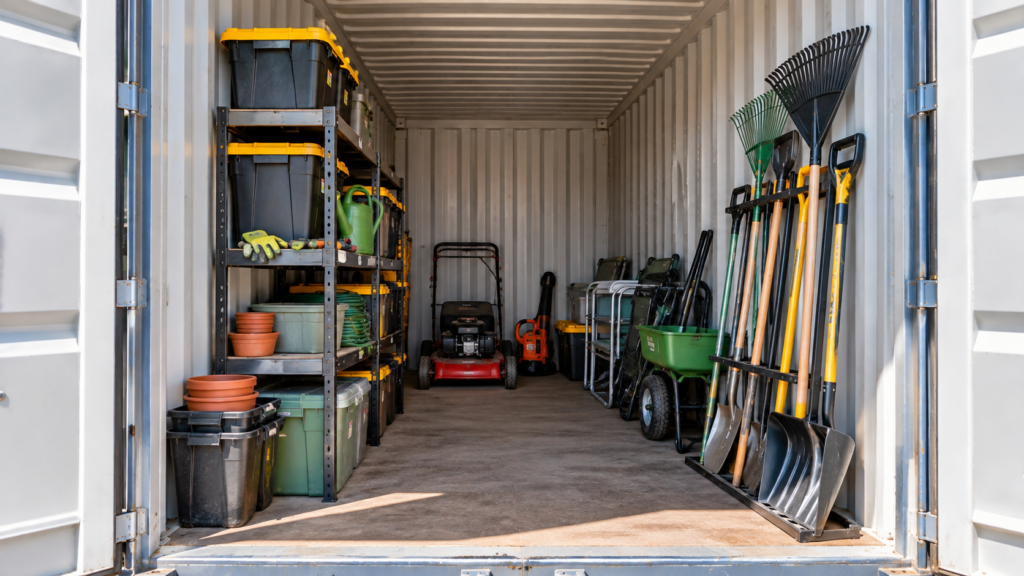
Keep contractor tools and building materials organized by project to make preparing for the next job easier. Illustrative image.
3. Protect Tools and Building Materials Between Jobs
Construction materials can be damaged by moisture, poor stacking, or improper handling.
Before placing items into storage:
- Clean and dry tools.
- Remove mud and other debris.
- Inspect metal equipment for corrosion.
- Keep small parts in labeled containers.
- Protect fragile tools with suitable cases.
- Store heavy materials low and securely supported.
- Follow manufacturer recommendations for batteries and electronics.
- Avoid storing wet lumber, damp cardboard, or moisture-sensitive materials in unsuitable conditions.
SteelSafe Pottstown offers drive-up container-style storage units. These units should not be treated as climate-controlled storage.
For materials that require specific temperatures or humidity levels, confirm that the storage environment is appropriate before moving them in.
SteelSafe’s Packing & Storing Tips offer additional guidance for cleaning, preparing, and arranging belongings before storage.
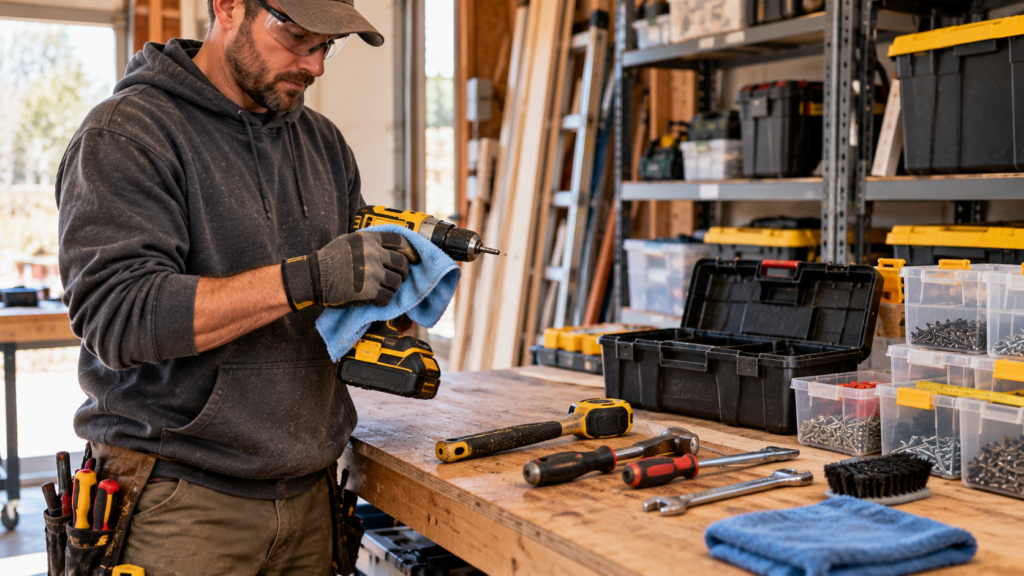
Cleaning and drying tools before storage helps protect equipment and keeps supplies ready for the next job. Illustrative image.
4. Choose the Right Contractor Storage Unit Size
SteelSafe Pottstown offers 8×20 and 8×40 ground-level drive-up storage units.
The right choice depends on the amount of equipment you manage and how often you need to retrieve it.
| Unit Size | Floor Area | Example Contractor Use |
| 8×20 | 160 sq. ft. | One trade’s reserve tools, packaged supplies, and organized shelving |
| 8×40 | 320 sq. ft. | Larger inventories, multiple projects, or separate equipment zones |
When an 8×20 Makes Sense
An 8×20 may suit a plumber, electrician, HVAC technician, or small remodeling contractor who needs organized space beyond a truck or garage.
For example, an electrical contractor could keep common fittings near the entrance, packaged materials for upcoming jobs in the middle, and backup tools toward the rear.
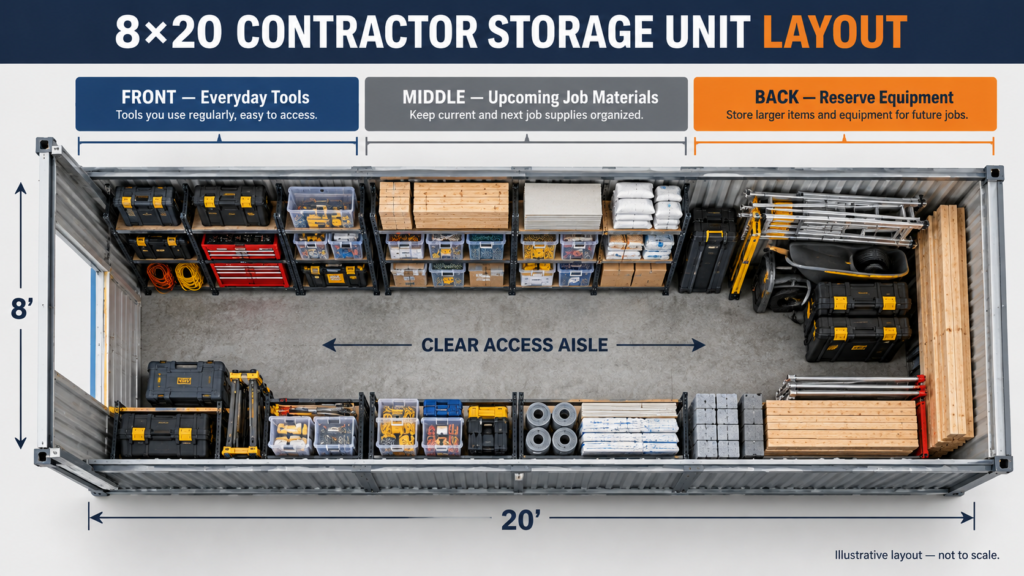
An example 8×20 contractor storage layout with designated areas for tools, project materials, and reserve equipment. Illustration only; actual fit may vary.
When an 8×40 Makes Sense
An 8×40 may work better for contractors managing larger inventories, multiple projects, or equipment used by several crews.
A general contractor could organize the unit into separate areas for frequently used tools, current job materials, and reserve equipment.
The additional floor area offers more flexibility for organizing stock while maintaining access.
An example 8×40 contractor storage layout showing how larger inventories can be separated into organized zones. Illustration only; actual fit may vary.
Before renting: Measure large equipment, check doorway clearance, and allow room for shelving and safe movement. These examples do not guarantee that specific belongings will fit.
SteelSafe’s Storage Unit Size Guide can help you compare the available dimensions.
5. Connect Storage to Real Pottstown Supply Runs
Pottstown contractors rely on a network of local and regional suppliers.
An organized storage unit can help businesses make better use of those supply runs.
Consider a roofer picking up materials from ABC Supply on Jones Boulevard. Rather than carrying reserve equipment and materials for several jobs, the contractor can keep permitted backup supplies organized in storage until needed.
An electrician stopping at Fromm Electric’s Pottstown supply counter may benefit from checking existing inventory before purchasing more connectors, fittings, or other supplies.
A remodeler collecting lumber from A.D. Moyer Lumber on Armand Hammer Boulevard can use the same approach: identify what is already available before buying materials for the next project.
For plumbing and HVAC contractors, APR Supply on River Road is another example. A plumber preparing for upcoming service calls can check stored fittings and packaged accessories before making a supply purchase.
Businesses sourcing hoses, fittings, or industrial components from Clark Industrial Supply on West High Street may also benefit from keeping reserve parts organized by category.
The advantage is not simply having storage space.
It is knowing what you already own, where it is stored, and what actually needs to be purchased.
6. Why Commerce Drive Fits Pottstown’s Contractor and Industrial Routes
Pottstown’s contractor and industrial activity extends beyond High Street.
Industrial Boulevard, Shoemaker Road, Route 100, and US 422 connect industrial properties, suppliers, warehouses, and jobsites throughout the area.
SteelSafe Pottstown is located at 1178 Commerce Drive, making it a practical storage stop for businesses planning routes through Pottstown and nearby communities.
For example, a contractor working between Route 100 and jobs in Sanatoga or Limerick can plan equipment pickups around the day’s schedule.
A remodeling crew serving Stowe, Kenilworth, Douglassville, or Gilbertsville may find it useful to keep permitted reserve supplies in one organized location rather than carrying everything between jobs.
The most practical approach is to plan storage visits alongside supplier pickups and jobsite travel.
That way, the storage unit becomes part of the work routine—not another unnecessary trip.
7. The Cost of Searching for Missing Materials
Poor organization can cost a business more than storage space.
Consider this simple example:
Three employees × 10 unnecessary minutes searching for materials × two occasions per week = 60 minutes of paid labor every week.
That’s one hour spent looking for supplies instead of completing work.
This is an illustrative calculation, not measured SteelSafe customer data.
A basic inventory system can help reduce avoidable searching.
| Item | Storage Location | Quantity |
| Backup tool cases | Front A1 | 3 |
| Packaged electrical fittings | Middle B1 | 8 bins |
| Plumbing accessories | Middle B2 | 5 bins |
| Permitted trim materials | Back C1 | 12 pieces |
Update quantities when materials are added or removed.
For crews sharing inventory, assign someone responsibility for keeping the list current.
8. Before You Store Contractor Supplies
Important Storage Rules
Do not store:
- Gasoline or other flammable liquids
- Propane or prohibited fuel containers
- Explosives
- Toxic or hazardous materials
- Liquid paint or solvents
- Perishable items
Additional requirements:
- Do not operate machinery or use the unit as an active workshop.
- Do not use the unit as a storefront or customer-facing business location.
- Do not assume climate-controlled conditions.
- Confirm unusual materials or fuel-powered equipment with the Pottstown team before moving them in.
Not sure whether a particular material or piece of equipment is permitted? Review SteelSafe’s Storage FAQ or contact the Pottstown team before moving it in.
9. Make Drive-Up Storage Part of Your Contractor Workflow
Contractors need a storage process that fits around their workday.
SteelSafe’s Drive-Up Storage guide explains how ground-level access can make loading and unloading tools, equipment, and supplies more practical.
At SteelSafe Pottstown, ground-level drive-up access allows customers to bring a vehicle directly to the unit.
The routine is straightforward:
Drive up → Retrieve tools or supplies → Load your vehicle → Continue to the next job.
SteelSafe Pottstown offers:
- 8×20 and 8×40 drive-up units
- Daily access from 6:00 a.m. to 8:00 p.m.
- Month-to-month rentals
- Online rental
- Access information provided after completing the rental process
These features support contractors who need a convenient place for reserve tools and permitted building materials.
Visit the SteelSafe Pottstown facility page for current unit options and facility details.
10. Keep Your Storage System Working
Once your tools and materials are organized, maintaining the system should be simple.
Review inventory regularly, return supplies to their assigned locations, and remove packaging that no longer serves a purpose.
If employees need access, contact SteelSafe Pottstown to confirm the current authorization process.
A short inventory review before purchasing materials can help avoid duplicate orders and unnecessary trips.
Contractor Storage Checklist
Before your next job:
- ☐ Keep today’s tools in the work vehicle.
- ☐ Organize reserve equipment by trade or project.
- ☐ Label shelves and containers.
- ☐ Check inventory before purchasing supplies.
- ☐ Keep stored materials clean and dry.
- ☐ Maintain safe access to equipment.
- ☐ Confirm that all materials comply with storage rules.
- ☐ Secure the unit after each visit.
Frequently Asked Questions
Can contractors rent storage units at SteelSafe Pottstown?
Yes. Contractors and other small-business customers can rent units for permitted tools, equipment, and supplies, subject to the rental agreement and facility restrictions.
Is an 8×20 or 8×40 better for contractor storage?
An 8×20 may suit a smaller collection of tools and packaged materials.
An 8×40 provides more floor area for larger inventories, multiple projects, or separate equipment zones.
Can I store gasoline, propane, or liquid paint?
No. SteelSafe prohibits liquids, flammable liquids, and other hazardous materials.
Contact the facility if you are unsure about a specific item.
Can I use my storage unit as a workshop?
No. Storage units are intended for storing belongings, not operating machinery or conducting active construction work.
What are SteelSafe Pottstown’s access hours?
SteelSafe Pottstown’s access hours are 6:00 a.m. to 8:00 p.m., seven days a week.
Keep Today’s Tools on the Truck and Tomorrow’s Supplies Organized
A crowded truck or trailer can make every job more complicated.
With an organized storage unit, Pottstown contractors can keep reserve tools and permitted building materials in one place, prepare for upcoming projects, and avoid carrying unnecessary equipment between jobs.
SteelSafe Pottstown offers ground-level drive-up 8×20 and 8×40 storage units, with month-to-month rentals and online move-in.
Check Pottstown Availability & Rent Online
SteelSafe Self Storage — Pottstown
1178 Commerce Dr, Pottstown, PA 19464
Phone: (484) 925-1925
Email: pottstown@steelsafestorage.com
Ready to Reserve a Self Storage Unit?
Additional Resources
Garage Full? When a Storage Unit Makes More Sense Than More Shelving
Garage Full? When a Storage Unit Makes More Sense Than [...]
Built Differently: A Closer Look at What Makes a SteelSafe Storage Unit Stand Out
Built Differently: A Closer Look at What Makes a SteelSafe [...]

Need Storage Next Month? How SteelSafe’s Future Reservation Works
Need Storage Next Month? How SteelSafe’s Future Reservation Works You [...]
Is Your Work Trailer Costing You Time? When Contractors Should Consider a Storage Unit
Is Your Work Trailer Costing You Time? When Contractors Should [...]

How Quickly Can I Get Into My Storage Unit After Renting Online?
How Quickly Can I Get Into My Storage Unit After [...]
Storage Unit Moisture and Condensation: What Causes It and How Can You Reduce It?
Storage Unit Moisture and Condensation: What Causes It and How [...]